
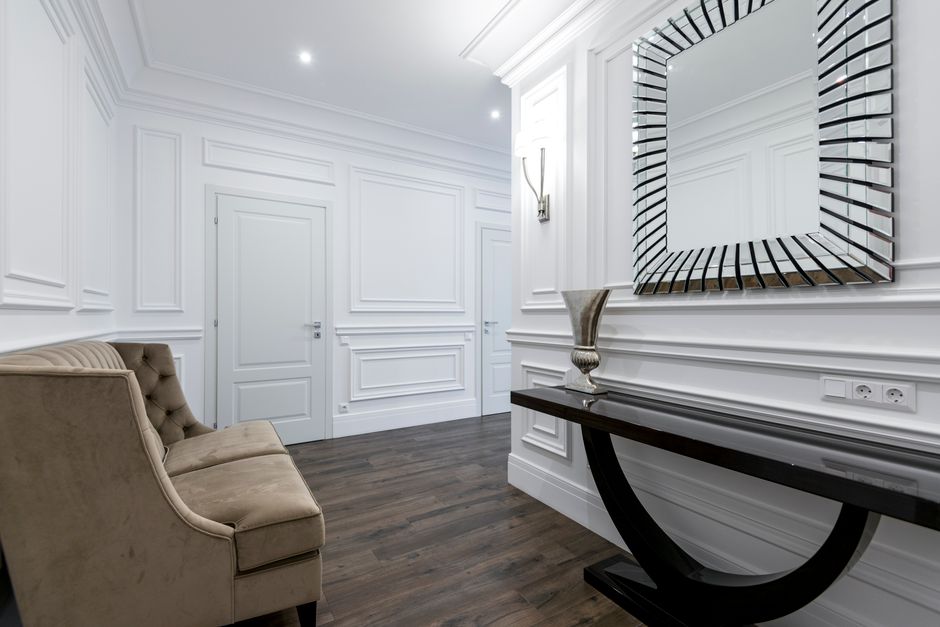
Most small hallways fail for a simple reason: shoes, coats, bags, and light fittings all fight for the same narrow strip of floor. I have found that the best results come from protecting the walking line first, then using colour and storage to make the remaining space work harder.
The best small hallway idea is a clear walking line
My strongest advice is to measure the usable walking width before buying anything. In a narrow entrance, a cabinet that looks shallow in a showroom can steal the clearance you need for two people to pass, a door to open fully, or a child to pull off muddy shoes without knocking something over. Aim to keep at least 90 centimetres of clear floor where possible, and treat 75 centimetres as the lower limit for a short pinch point rather than the target for the whole hall. This matters more than adding another shelf. A hallway feels bigger when the eye can travel from the front door to the next room without stopping at a bulky object, a dark corner, or a row of items on the floor. Put storage on one wall, keep the opposite wall visually quiet, and choose furniture that follows the wall rather than projecting into the route. A mirror can help, but it will not rescue a cramped layout; it simply reflects the clutter if the floor is already crowded. The verdict is clear: remove floor-level obstacles before decorating. A plain hallway with one slim storage zone feels more generous than a styled hallway packed with baskets, benches, hooks, and plants.
Which storage works in a narrow hallway?
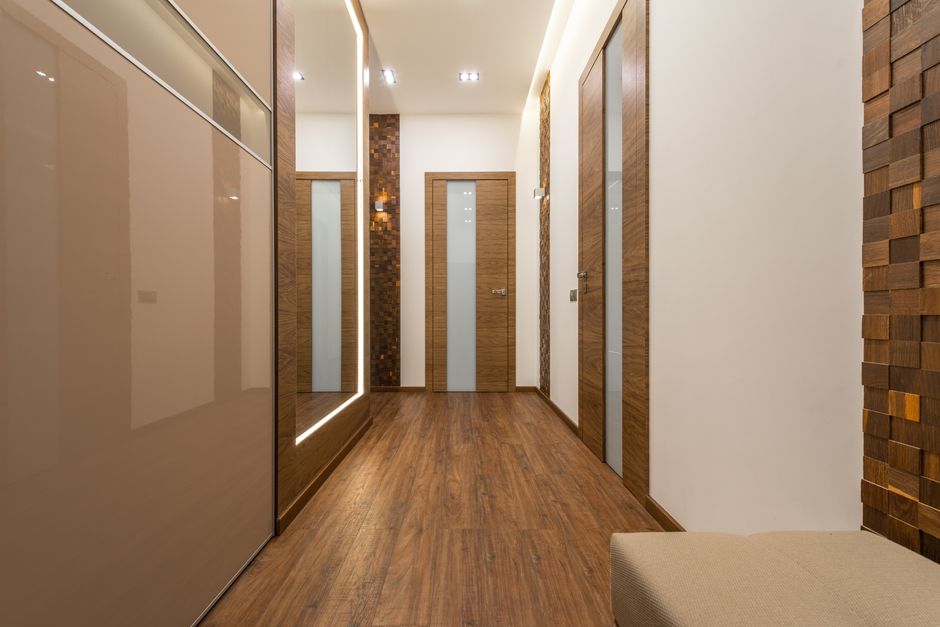
For a 2026 planning budget, these are the options I would compare first. Prices vary by country, but the depth and width are the figures that decide whether a piece will work.
| Storage option | Approximate size | Planning price | Best use |
|---|---|---|---|
| IKEA TRONES shoe cabinet | 52 W x 18 D x 39 H cm per cabinet | About $40 for two | Daily shoes in a very shallow hall |
| Yamazaki Home Tower Slim Shoe Rack | About 45 W x 20.5 D x 86 H cm | About $90 | Open storage for frequently worn shoes |
| IKEA HEMNES shoe cabinet | 89 W x 30 D x 127 H cm | About $249 | Higher capacity when the hall is wide enough |
| IKEA KALLAX 2 x 2 | 77 W x 39 D x 77 H cm | About $60 | Only for a deep entrance or side wall |
| Wall-mounted hooks and shelf | Usually 20 to 25 D cm | About $30 to $120 | Coats, keys, and bags above the floor |
The shallowest useful option
The IKEA TRONES is my pick when every centimetre matters. It holds shoes vertically, sits only about 18 centimetres deep, and gives the wall a clean, repeated rhythm. It will not store winter boots or a large family collection, so use it for the shoes worn during the week and move the rest elsewhere.
When capacity matters more than depth
The IKEA HEMNES gives much more capacity, but its 30-centimetre depth and 127-centimetre height make it a poor choice for a genuinely tight corridor. Choose it only when the clear walking width remains comfortable after installation. I would buy the Yamazaki Tower Slim instead for open access in a narrower space, even though it holds less.
Do not buy the IKEA KALLAX just because it is inexpensive. At roughly 39 centimetres deep, it often turns a normal hallway into a slalom course. For a narrow entrance, depth beats storage volume.
How colour makes a small hallway feel wider
Colour cannot change the measurements of a hallway, but it can change where the eye sees its boundaries. My preferred approach is to use one calm, light-reflecting colour across the walls, ceiling, and any awkward return wall instead of creating a sharp contrast at every corner. That continuous field makes the surfaces read as one shape, which reduces the chopped-up feeling that narrow halls often have.
Use contrast at the far end
If the hallway is long and tunnel-like, paint the end wall one step darker than the side walls. This gives the eye a destination and makes the corridor feel less endless. Keep the darker colour muted rather than dramatic. A dusty blue, soft olive, or warm clay tone usually feels more considered than a strong feature colour that makes the end wall rush toward you.
Choose warm or cool light with care
North-facing halls can make clean white look grey and cold, especially under bulbs below 3000K. A warm off-white or pale stone colour usually works better there. South-facing halls receive stronger light, so a very pale neutral can become glaring; a mid-light beige, soft greige, or chalky green can add depth without making the passage look dark. Test paint on two walls and view it in the morning, afternoon, and evening. The same colour can look creamy beside daylight and yellow beside warm artificial light.
Make the ceiling earn its height
Paint a low ceiling the same colour as the walls or only slightly lighter. The usual bright-white ceiling can create a hard horizontal line that makes the hall feel shorter. If the ceiling is high, a colour that runs 10 to 20 centimetres down the upper wall can make the proportions feel calmer. The best colour verdict is simple: use continuity first, contrast second, and never choose a shade from a tiny paper sample alone.
Five hallway mistakes that make a small space feel smaller
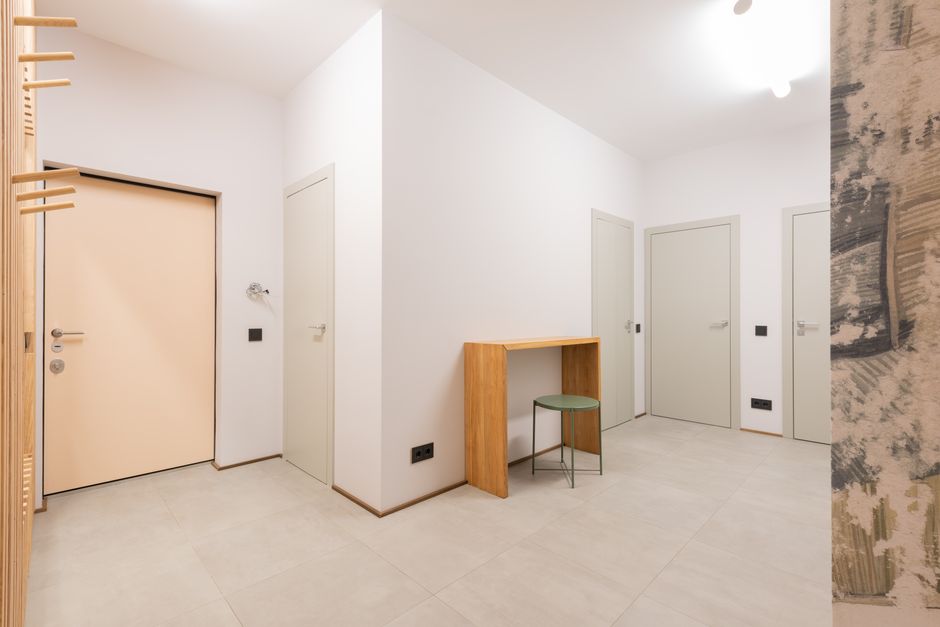
- Buying furniture before measuring door swings. Mark the full arc of each door on the floor with masking tape. A cabinet that fits the wall can still block a cupboard, bathroom, or front door.
- Using the deepest storage available. More capacity is not automatically better. The IKEA KALLAX 2 x 2 unit is cheap and useful in many rooms, but its roughly 39-centimetre depth is excessive for many narrow halls. Choose the IKEA TRONES or a wall-mounted solution when the walking line is tight.
- Putting every item at eye level. A wall filled with hooks, frames, shelves, and signs looks busy even when the floor is tidy. Keep the most-used items between waist and shoulder height, then leave one broad area empty.
- Adding a bench that becomes a dumping zone. A bench needs a job. If it does not provide seating, closed storage, or a clear place to put shoes, it is taking up floor space for decoration. In a small hall, a 30-centimetre-deep seat is already a major commitment.
- Choosing a glossy white finish everywhere. Gloss can bounce light, but it also shows scuffs, fingerprints, and uneven walls. A washable eggshell or durable matt finish gives you the light benefit with less visual noise.
- Relying on one ceiling light. A single central fitting throws shadows at the entrance and leaves the storage wall dull. Add a wall light, picture light, or low-profile LED strip where local wiring allows it. Light should reveal the full width of the hall, not just the middle.
My clear winner for most homes is a shallow closed cabinet plus a small hook zone, with the rest of the wall left empty. Open storage is easier to reach, but closed storage hides the daily mess that makes a hallway feel narrow.
Small hallway questions that decide the layout
Should a small hallway have a mirror?
Yes, if the mirror reflects light, a window, or a calm section of wall. Place it on the long wall rather than directly opposite a crowded shoe rack. A full-height mirror can make the hall feel wider, but a narrow vertical mirror works better when wall space is limited. Avoid positioning it where the first thing it reflects is a pile of coats.
Are dark colours always a mistake in a narrow entrance?
No. Dark colour can make a short hallway feel richer and more settled, especially when the entrance has good daylight. The mistake is using a dark shade on every surface without enough lighting or contrast. For a long, windowless corridor, I would use a light continuous colour on the side walls and reserve the deeper tone for the end wall, door, or lower half of the space.
What should stay out of a small hallway?
Anything that has no daily role should leave first: spare shoes, oversized baskets, decorative stools, and coats that belong in another season. The hallway is a transition space, not a storage unit for the whole home. Keep one working set of shoes, the coats used now, and a small landing place for keys. Once those limits are clear, the entrance stops feeling like an obstacle course.
That is the fix for the familiar scene at the front door: shoes no longer spill across the walking line, bags have one defined home, and the colour carries the eye through the space. The hallway may still be small, but it finally feels intentional rather than crowded.