

Did you know that approximately 74% of the population sleeps on their side? Despite being the most common sleeping position, it is also the most demanding when it comes to mattress engineering. Side sleepers concentrate their entire body weight onto two primary contact points: the shoulder and the hip. If a mattress is too firm, these areas experience high-pressure spikes that lead to numbness and tossing and turning. If it is too soft, the midsection sinks, pulling the spine out of alignment and causing chronic lower back pain. Finding that narrow ‘Goldilocks’ zone of contouring and support is a technical challenge that requires looking beyond marketing fluff and into the actual density of foams and the gauge of steel coils.
Why 74% of People Sleep on Their Side and What It Does to Your Spine
Side sleeping is often heralded by sleep scientists as the healthiest position for reducing acid reflux and snoring. However, it introduces a mechanical problem: the human frame is not a flat board. When you lie on your side, your shoulders are wider than your waist, and your hips are wider than your thighs. To maintain a neutral spine—where your vertebrae form a straight line from your neck to your tailbone—the mattress must allow the shoulder and hip to sink in deeply while simultaneously pushing back against the waist to prevent sagging. This is known as pressure mapping, and it is the primary metric we use to evaluate whether a bed is actually suitable for side sleepers.
When the spine is misaligned for eight hours a night, the muscles never truly relax. They stay in a state of micro-tension, trying to pull the spine back into place. This is why many people wake up feeling ‘stiff’ or like they need a deep stretch immediately. Furthermore, for side sleepers, the ‘fetal’ position is common, but a too-tight curl can restrict breathing. A mattress with proper ‘give’ allows for a more elongated side-sleeping posture, which improves circulation. If you are sharing a bed with a partner or a pet—a common scenario in family households—the mattress also needs to manage motion transfer. A dog jumping onto the foot of the bed shouldn’t send a shockwave that jars your shoulder out of its comfortable pocket.
Research into sleep ergonomics suggests that the ideal firmness for a side sleeper usually falls between a 5 and a 7 on the 10-point firmness scale. This ‘medium’ to ‘medium-firm’ range provides enough sinkage for the shoulder to disappear into the top layers without the sleeper feeling like they are stuck in quicksand. We also have to consider the ‘loft’ of your pillow, as a side sleeper needs a higher profile pillow to fill the gap between the ear and the mattress, ensuring the cervical spine (neck) stays aligned with the rest of the back.
Essential Features Every Side Sleeper Needs in a Mattress

When you are browsing home decor sites or looking through ShareASale-affiliated retailers like Wayfair, you will see thousands of options. To cut through the noise, you need to look at three specific technical specifications: material density, zoned support, and transition layers. These are the components that determine if a mattress will hold its shape for ten years or start sagging in the middle after eighteen months.
Zoned Support Systems
Zoned support is perhaps the most critical innovation for side sleepers. In a zoned mattress, the middle third of the bed (where your hips and lower back sit) is reinforced with firmer foam or higher-gauge coils. Meanwhile, the areas under the shoulders are kept softer. This creates a ‘cradle’ effect. Without zoning, a mattress that is soft enough for your shoulders will almost certainly be too soft for your hips, leading to the dreaded ‘hammock’ effect that destroys your lower back. Look for mattresses that specifically mention ‘3-zone’ or ‘5-zone’ construction.
Transition Layer Density
The transition layer is the foam that sits between the soft comfort top and the hard support base. For side sleepers, this layer prevents ‘bottoming out.’ If you weigh over 180 pounds and sleep on a cheap all-foam mattress, your shoulder will push straight through the soft top and hit the hard support core. High-quality mattresses use a transition layer of polyfoam or latex with a density of at least 1.8 lbs per cubic foot. This provides a gradual deceleration for your pressure points, ensuring you never feel the ‘floor’ of the mattress.
Heat Dissipation and Edge Support
Side sleepers often complain of sleeping hot because more of their body surface area is in direct contact with the mattress compared to back sleepers. Materials like copper-infused memory foam or phase-change material (PCM) covers are not just gimmicks; they actively pull heat away from the skin. Additionally, if you tend to sleep near the edge of the bed to give your kids or pets more room in the center, reinforced edge support is vital. A mattress with weak edges will make you feel like you are rolling off the bed, causing you to tense your muscles all night just to stay on the mattress.
Top Mattress Recommendations for Side Sleepers with Real-World Pricing
Based on rigorous analysis of material specs and user feedback, these four models represent the best-in-class options for various budgets and preferences. Note that prices frequently fluctuate based on seasonal sales, but these figures represent the standard ‘sale’ price you can expect to find.
| Mattress Model | Approx. Price (Queen) | Best For | Firmness (1-10) |
|---|---|---|---|
| Helix Midnight Luxe | $1,899 – $2,299 | Luxury Side Sleeping | 5.5 / 10 |
| Nectar Premier Copper | $1,249 – $1,499 | Memory Foam Lovers | 6.5 / 10 |
| WinkBed (Luxury Firm) | $1,499 – $1,799 | Heavy Sleepers / Back Pain | 6.5 / 10 |
| Saatva Classic | $1,695 – $1,995 | Traditional Innerspring Feel | 5.5 / 10 (Soft) |
Helix Midnight Luxe
The Helix Midnight Luxe is specifically engineered for side sleepers. It features a zoned coil system that is softer under the shoulders and firmer under the hips. The ‘Luxe’ version includes a quilted pillow top and a Tencel cover for better airflow. Pro: Incredible pressure relief that virtually eliminates shoulder pain. Con: It is relatively expensive compared to standard bed-in-a-box options.
Nectar Premier Copper
For those who prefer the ‘hug’ of memory foam, the Nectar Premier Copper is a standout. It uses a 14-inch profile with layers of gel memory foam. The copper infusion in the cover helps with temperature regulation, which is a common complaint with all-foam beds. Pro: Excellent motion isolation—perfect if you have a restless pet. Con: It lacks the ‘bounce’ of a hybrid, making it harder to change positions.
WinkBed (Luxury Firm)
The WinkBed is a heavy-duty hybrid that uses a dual-coil system. It feels more like a traditional hotel mattress but with modern pressure-relieving foams. The ‘Luxury Firm’ model is actually quite plush on top, making it ideal for side sleepers who need a bit more support for their spine. Pro: Best-in-class edge support. Con: The mattress is very heavy and difficult to move or rotate alone.
Creating a Cohesive Bedroom: Matching Your Mattress with Sherwin Williams Paint Colors

Sleep quality isn’t just about what you are lying on; it is about the environment your brain perceives before you close your eyes. When designing a bedroom around a high-end mattress, the wall color plays a psychological role in lowering your heart rate. Since side sleepers often have a more sensitive physical response to their environment, a calming color palette is essential. We recommend looking at specific Sherwin Williams paints that complement the ‘cloud-like’ feel of a premium side-sleeper mattress.
Sherwin Williams Sea Salt (SW 6204) is a perennial favorite for master bedrooms. It is a complex blend of green and blue with a gray undertone. In a room with a plush mattress and white linen bedding, Sea Salt creates a spa-like atmosphere that reinforces the feeling of weightlessness. It reacts beautifully to natural light, shifting from a soft green in the morning to a muted blue in the evening. If you prefer something more grounded, Sherwin Williams Agreeable Gray (SW 7029) provides a perfect ‘greige’ backdrop that doesn’t distract the eye. It is the ultimate neutral that allows your home decor, such as textured throw blankets or wooden bed frames, to take center stage.
For those who want a darker, more cocoon-like experience, Sherwin Williams Naval (SW 6244) is a deep navy that can actually help trigger melatonin production by mimicking the night sky. When paired with a light-colored mattress like the Helix Midnight Luxe, the contrast is sophisticated and modern. Remember that dark colors can make a room feel smaller, so if your bedroom is tight, consider using Naval on a single accent wall behind the headboard. This creates a focal point without overwhelming the space. Matching these colors with high-quality bedding from ShareASale partners like Wayfair or Serena & Lily can transform a standard bedroom into a professional-grade sleep sanctuary.
Maintenance and Longevity: How to Keep Your Side-Sleeping Mattress from Sagging
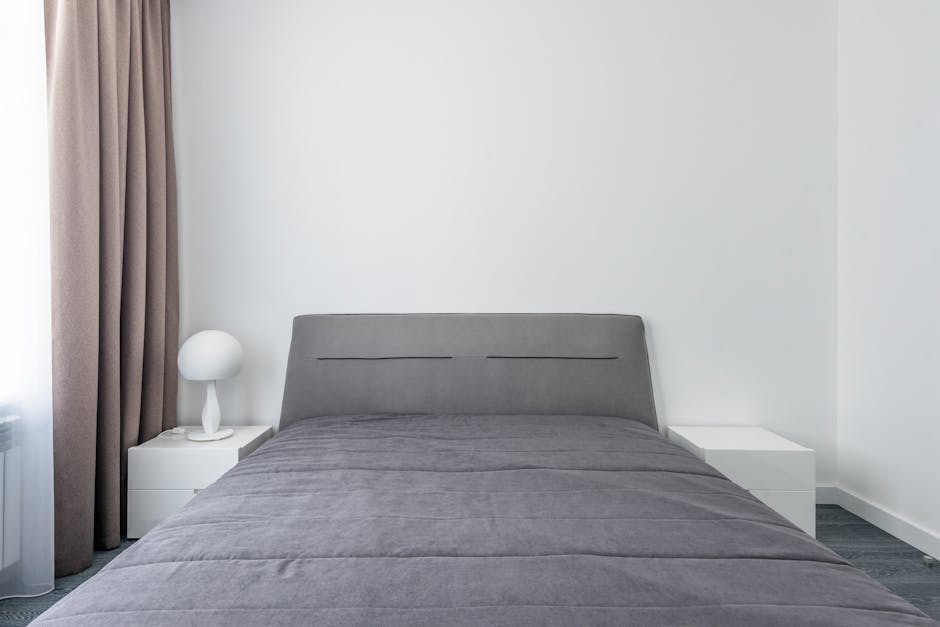
Once you have invested $2,000 in a mattress and spent the weekend painting your walls with Sherwin Williams Rainwashed, the last thing you want is for the bed to develop a permanent dip after two years. Side sleepers are particularly prone to creating ‘body impressions’ because they concentrate their weight in the same narrow channel every night. To prevent this, you must follow a strict maintenance schedule.
- Rotate, Don’t Flip: Most modern hybrid and memory foam mattresses are one-sided, meaning they have a specific support core at the bottom and comfort layers on top. You cannot flip them. However, you should rotate the mattress 180 degrees every three to six months. This ensures that your hip weight isn’t always hitting the exact same springs or foam cells.
- Use a Proper Foundation: A common mistake is putting a high-quality mattress on an old box spring. Modern mattresses require a solid, non-flexing surface. If you use a slatted frame, the slats must be no more than 3 inches apart. If they are wider, the mattress will sag between the slats, voiding your warranty and ruining your spinal alignment.
- Invest in a Waterproof Protector: If you have pets or children, a waterproof protector is non-negotiable. Moisture—whether from spills, accidents, or even just sweat—breaks down the cellular structure of memory foam and polyfoam, causing it to lose its resiliency much faster. Look for a ‘breathable’ protector that uses a TPU membrane rather than noisy plastic.
The lifespan of a high-quality hybrid mattress is typically 7 to 10 years. If you find yourself waking up with new hip pain or if you can see a visible indentation of more than 1.5 inches when no one is on the bed, the comfort layers have likely reached their ‘fatigue point’ and the mattress needs to be replaced.
Ultimately, the best mattress for a side sleeper is one that balances the immediate ‘ahhh’ feeling of softness with the long-term ‘ohhh’ feeling of a back that doesn’t ache. By combining a zoned-support mattress with a soothing Sherwin Williams color palette and a dedicated maintenance routine, you are not just buying a piece of furniture; you are investing in the biological recovery of your body. Sleep is the foundation of family health, and for the 74% of us who prefer our sides, getting the mechanics right is the first step toward a better day.