
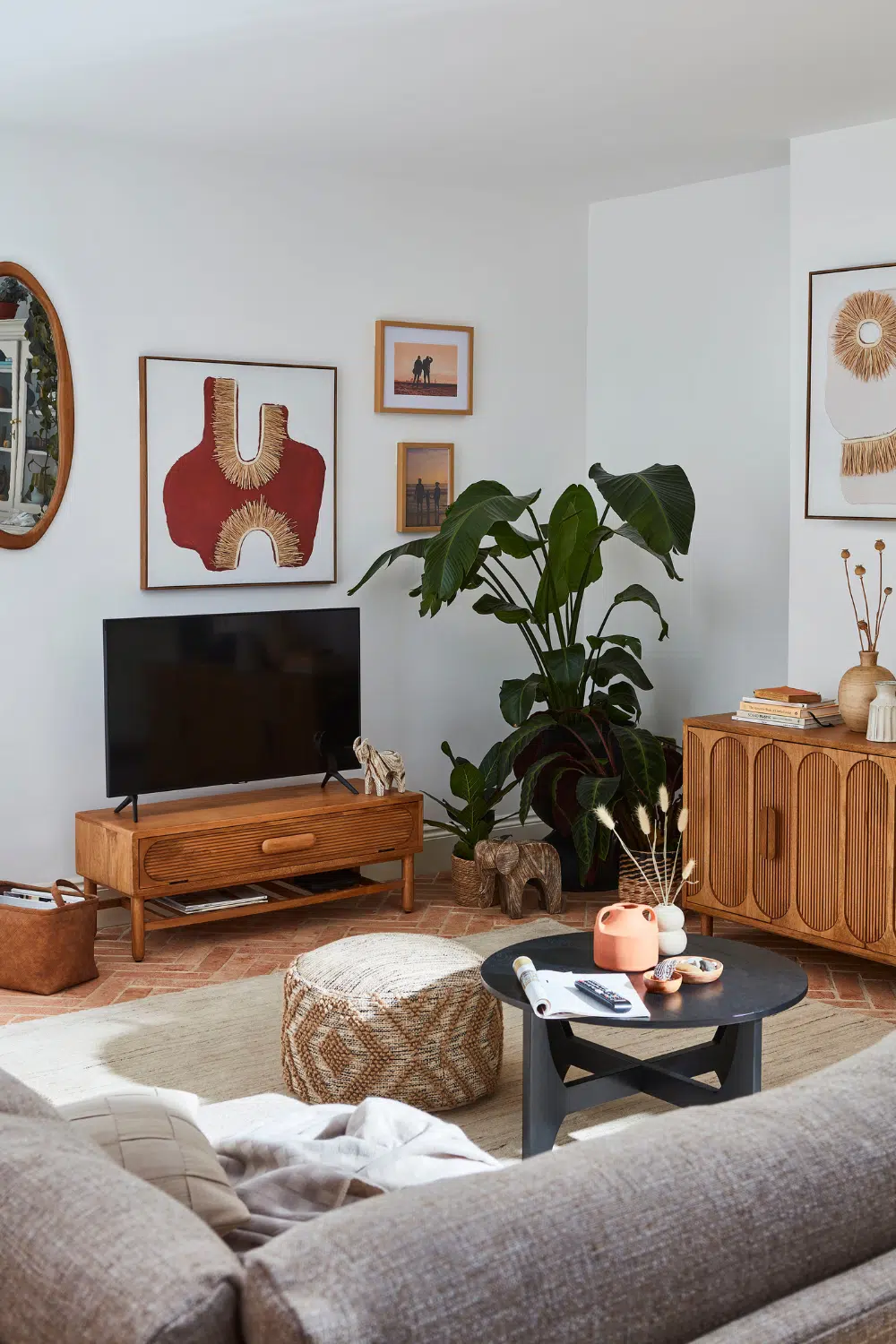
Can two colors this different share a room without fighting?
Grey pulls cool and modern. Terracotta runs warm, earthy, almost rustic. On paper, they sit at opposite ends of the temperature dial. In practice, rooms that combine them tend to feel more layered and grounded than rooms built on a single neutral — provided the shade selection is right.
Get the shades wrong and the room reads muddy, or like an unintentional 1970s throwback. Get them right and the palette is one of the more effortlessly sophisticated combinations available right now, particularly for family living spaces where the room needs to feel warm and livable rather than gallery-cold.
Here are 11 specific approaches, organized from lowest commitment to most involved, with the color names, ratios, and real products that make each one work.
Why Grey and Terracotta Work — and When They Don’t
The fundamental tension is temperature. Terracotta is a warm neutral — its orange-red tones share a spectrum with aged leather, warm wood, and unglazed clay. Grey spans a much wider range, from blue-toned cool greys to warm greige-toned mid-greys, and that range determines whether the combination coheres or conflicts.
Pair terracotta with a blue-toned cool grey — something like Benjamin Moore “Gray Owl” OC-52 or Sherwin-Williams “Misty” SW 6232 — and the room typically develops a visual argument. The cool undertone in the grey pushes toward blue-grey; the terracotta pulls toward warm orange. Neither color wins, and the space reads as unsettled.
Pair the same terracotta with a warm grey — Sherwin-Williams “Agreeable Gray” SW 7029, Farrow & Ball “Mole’s Breath” No.26, or Benjamin Moore “Revere Pewter” HC-172 — and the undertones align. Both colors are pulling toward the same temperature zone: warm, organic, grounded.
The Undertone Test Most Homeowners Skip
Paint chips at the hardware store are typically displayed under artificial lighting that neutralizes undertones. A swatch that looks clean warm grey under store lights can turn noticeably blue-purple or pink on your walls at home. The only reliable method is testing a swatch at least 12 inches square in the actual room, viewed across multiple times of day. This step is worth more than any color wheel theory.
Why This Palette Works Especially Well for Family Rooms
There is a practical dimension here that pure design guides overlook. Terracotta tones hide pet hair more effectively than cool whites or pale neutrals — warm orange shades sit close on the spectrum to golden retrievers, tabby cats, and most dog breeds. Deeper terracotta upholstery also masks surface wear and minor staining better than pale upholstery. For households with pets and children, this is a genuine functional advantage, not just an aesthetic one.
11 Grey and Terracotta Living Room Ideas
These are arranged from the easiest, most reversible starting points down to full room commitments.
- Terracotta throw pillows on a grey sofa. The lowest-risk entry point. Four to six terracotta cushions — IKEA’s SANELA velvet cushion cover in rust orange at $20 each is a near-perfect shade match — against a mid-grey sofa introduces the palette without a single paint chip changed. Start here if you are uncertain.
- Terracotta ceramic vases and objects on shelving. A cluster of terracotta ceramics on a console table or bookshelf anchors warm tone in a predominantly grey room. H&M Home has carried grouped terracotta vase sets in the $20–$40 range for several years. Target’s Threshold collection also carries terracotta ceramic pots and planters at $15–$30.
- A rug that carries both colors. Loloi’s “Anastasia” and “Amber” collections include rugs that weave terracotta and ivory into a grey or cream field. This pulls both palette colors into the floor plane — the largest surface in a room — making the combination feel designed rather than assembled. Prices for a 5×8 run $180–$350.
- Terracotta curtains, grey upholstery. Hanging warm curtains introduces terracotta at the window, exactly where warmth reads most naturally in a room. IKEA HANNALILL panels in beige-terracotta at $40 per panel are a cost-effective way to test this configuration. Grey linen curtains behind a terracotta sofa produces the inverse but equally valid version.
- A single terracotta accent wall behind the sofa. One wall painted Sherwin-Williams Cavern Clay SW 7701 behind a grey sofa creates strong visual focus without saturating the room in warm color. This configuration works best on the wall the sofa faces, not the wall it sits against. The grey sofa then reads as a counterweight to the warm wall.
- A terracotta velvet sofa as the hero piece. West Elm’s Harmony sofa in “Canyon” — a warm terracotta-orange — costs approximately $1,899 and functions as the statement piece in an otherwise grey or warm-grey room. Supporting the sofa with grey linen cushions and warm-toned wood furniture keeps the palette balanced. This configuration reads bold but cohesive.
- Exposed brick as natural terracotta. Rooms with exposed brick or a brick fireplace surround already carry built-in terracotta tones. Painting adjacent walls in warm grey — Farrow & Ball “Mole’s Breath” or Benjamin Moore “Revere Pewter” — frames the brick as an intentional design feature rather than a dated architectural remnant. The grey makes the brick look better.
- A mid-tone walnut sideboard bridging both colors. Natural walnut or oak tones carry warm undertones that visually connect grey walls to terracotta accessories. The wood functions as a bridge material, reading as warm against the grey while picking up the earth tones in the terracotta. Article’s “Nera” sideboard in natural walnut at $849 works effectively in this configuration.
- Terracotta geometric wallpaper on one wall. A geometric or botanical print with terracotta and white on a single feature wall — remaining walls in grey — adds visual complexity without saturating the room. Graham & Brown produces several relevant options at $40–$60 per roll. One patterned wall in a primarily grey room is typically enough pattern to anchor the warm tone.
- Botanical art prints in terracotta tones, framed in grey or black. Gallery walls featuring terracotta-toned prints — dried botanicals, abstract warm-toned pieces, vintage floral illustrations — introduce the warm color at eye level without furniture or paint. Grey or matte black frames tie the prints back to the grey in the room. This is particularly effective in grey rooms that feel too cold or clinical.
- Full palette commitment: grey, terracotta, brass, and natural fibre. The most layered version. Grey walls and primary upholstery, terracotta in rugs or accent chairs, brass or brushed gold hardware and lighting, jute or sisal as a grounding texture. The brass picks up warm tones from the terracotta; the natural fibre keeps the grey from reading as corporate. Article’s Sven Birch sofa in charcoal grey at $1,199 paired with a Loloi terracotta-patterned rug and a brass pendant light produces a complete, intentional room.
Shade Pairing Guide: Which Greys Work With Which Terracottas
Most design guides show the color combination without addressing shade compatibility. This table covers the pairings that work — and one common combination that consistently fails.
| Grey Shade | Undertone | Compatible Terracotta | Why It Works |
|---|---|---|---|
| Sherwin-Williams Agreeable Gray SW 7029 | Warm beige | Sherwin-Williams Cavern Clay SW 7701 | Matching warm undertones; highly cohesive, low contrast |
| Farrow & Ball Mole’s Breath No.26 | Warm purple-grey | Benjamin Moore Exotic Red 2086-30 | Purple-grey adds depth; deeper rust prevents the room reading flat |
| Benjamin Moore Revere Pewter HC-172 | Warm khaki | Behr Burnished Brick N190-6 | Khaki undertone in the grey bridges earth and warmth naturally |
| Dulux Goose Down (UK) | Soft warm grey | Fired Earth Burnt Terracotta | Quiet pairing suited to low-light rooms or smaller spaces |
| Benjamin Moore Gray Owl OC-52 | Cool blue-grey | Not recommended | Cool undertone conflicts with terracotta’s warmth; room reads muddy |
The bottom row matters. Cool greys with blue undertones are among the most popular neutrals in residential paint — “Gray Owl,” “Sea Salt,” “Repose Gray” all lean cool. Any of these paired with terracotta typically produces a room that feels unsettled rather than designed. The conflict is not always obvious until the full room is assembled, which is why the test swatch step is non-negotiable before committing to this palette.
A useful shortcut: hold a terracotta paint chip or fabric sample against the grey swatch in the actual room light. If the grey starts to look purple or blue next to the terracotta, you have an undertone conflict. If both colors look richer next to each other, the pairing works.
Real Products That Bring This Palette Together
The following recommendations are organized by budget and prioritize longevity over trend.
Under $100: Test With Textiles First
IKEA SANELA velvet cushion covers in rust-orange run $20 each. Four covers on an existing grey sofa costs $80 total and is fully reversible. Add a terracotta candle or ceramic from Target’s Threshold line at $15–$20 and the palette is introduced without a single permanent change. This is the correct starting point for anyone uncertain about full commitment.
$100–$600: Establish the Palette at Floor Level
Loloi’s Anastasia collection at 5×8 runs approximately $220 and is the single most effective mid-budget move in this palette. A rug carrying both terracotta and grey ties the floor plane together and makes any grey sofa or grey wall feel intentional. Pair with IKEA AINA curtains in natural linen at $60 per pair for a complete lower-room treatment under $300 total.
$600 and Up: Furniture as the Palette Carrier
The Article Sven Birch sofa in charcoal grey ($1,199) against Sherwin-Williams Cavern Clay on a single wall is a proven combination with a well-established design lineage. West Elm’s Logan sofa in charcoal at $1,699 offers a slightly more contemporary silhouette for the same palette. Either sofa in a true mid-grey performs better than pale grey upholstery, which can look washed out next to warm terracotta.
Five Mistakes That Ruin the Combination
The most common failure: too much terracotta. Once warm tone exceeds roughly 40% of the visual field — terracotta walls plus terracotta rug plus terracotta pillows — the grey loses its function as a counterweight. The room stops reading as a designed palette and starts reading as a warm-toned maximalist space. That is a valid design choice, but it is not the grey-and-terracotta balance most people are looking for.
- Using a cool grey. As noted in the shade pairing table, blue-toned greys conflict with terracotta undertones. This is the single most common error, and it is entirely avoidable with a swatch test.
- Ignoring wood and flooring undertones. Pink-toned hardwood or reddish laminate flooring can clash sharply with terracotta textiles. In rooms with pink or red-undertone floors, use deeper, more muted terracotta rather than bright orange-red shades.
- Synthetic fabrics in terracotta. Acrylic or polyester textiles in terracotta tones read flat and cheap. Velvet, linen, wool, or cotton in the same color reads deliberate. Material quality is more visible in warm earth tones than in cool neutrals because warm tones draw more visual attention.
- Mixing in cool-toned metals. Chrome, nickel, and stainless steel belong in a different palette. Brass, brushed gold, or matte black are the correct metal choices for grey-terracotta rooms. Even a single chrome lamp base can undercut the warmth the rest of the room is building.
- Buying terracotta textiles online without samples. The word “terracotta” covers a range from pale salmon to deep rust depending on the retailer. Order samples or purchase from retailers with strong return policies before committing to large pieces.
When This Palette Is the Wrong Choice
North-facing rooms with minimal natural light should avoid this combination unless the terracotta is deep and saturated — pale clay tones read brownish and flat in cool indirect light. Rooms already carrying multiple strong colors rarely have enough visual space to absorb a deliberate two-tone palette. In those cases, grey-and-sage or grey-and-mustard typically deliver comparable warmth with fewer compatibility risks.
The single most useful thing to know before committing: warm grey plus warm terracotta works consistently; cool grey plus any terracotta rarely does.


Leave a Reply