
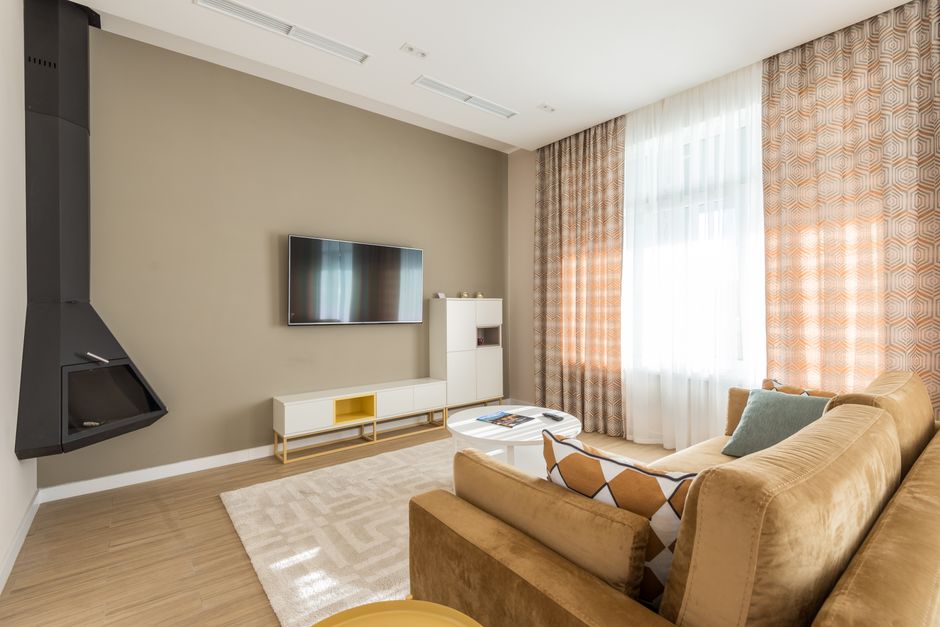
Why does your living room still feel like an oven when the air conditioner is running? The room stays hot because the furniture blocks the air path. A deep couch sits under the supply vent. The coffee table narrows the walking route. Curtains cover the return grille. Warm air collects above the seating area and never moves across the room.
The fix starts with the layout, not a colder thermostat. Airflow needs a clear path from the supply vent, across the occupied part of the room, and back toward the return grille or an open doorway. Move the largest obstacles first. Then add a fan only if the room still has dead spots.
Why does a living room feel hot when the AC runs?
Warm air gets trapped above furniture
Cooling equipment does not cool every part of a room at the same speed. Cold air leaves the supply vent, drops or spreads, and then mixes with warmer room air. A tall bookcase, high-backed sofa, or oversized cabinet can interrupt that movement. The result is a cool patch near the vent and a hot pocket around the seating area.
Heat also rises toward the ceiling. If the ceiling fan pushes air straight down in a room with poor circulation, it may create a cold draft in one spot while leaving the far side stagnant. The better goal is a slow, broad exchange of air across the whole room.
The return path matters as much as the supply vent
Many living rooms have one supply vent and a return grille on the opposite wall or in a nearby hallway. If a sofa, console, or curtain covers the return, the system has a harder time pulling warm air out. Keep the return grille open and leave at least 12 inches of space in front of it. That single change often matters more than dropping the thermostat another two degrees.
A clear supply-to-return route beats a colder setting and usually makes the space feel more even.
Which furniture moves improve airflow first?
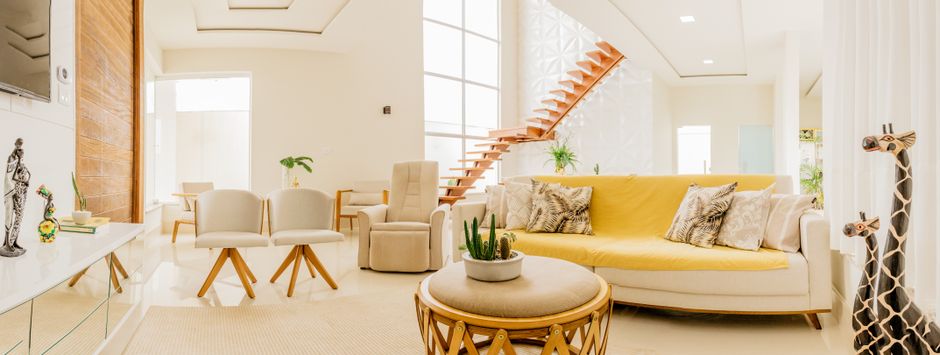
Start with the three biggest blockers
- Move the sofa at least 12 inches away from a supply vent, return grille, or exterior wall with a low vent.
- Pull tall bookcases and media cabinets away from vents. Leave 6 to 12 inches behind them when the wall allows it.
- Shift the coffee table so the main path from the seating area to the doorway stays at least 30 inches wide.
- Open curtains on the shaded side of the room and keep them from hanging over floor vents.
Do these moves in order. Large furniture creates the biggest pressure and circulation problems. Decorative objects usually create small problems unless they sit directly over a vent.
Keep the seating zone open, not empty
You do not need to turn the room into a showroom. Keep the sofa, chairs, and table grouped for conversation, but avoid placing every piece against a wall. A chair angled 20 to 30 degrees toward the sofa leaves more open space behind it than a chair pushed flat against the wall. That gap lets air travel around the seating zone instead of stopping at the first solid surface.
Verdict: Move the sofa and tall storage before buying equipment. The best first layout is the one that opens the route between the vent, people, and return grille.
How much space should furniture have around vents?
Use these working clearances
| Room feature | Clearance target | Reason |
|---|---|---|
| Supply vent | 12 inches in front | Gives discharged air room to spread |
| Return grille | 12 to 24 inches in front | Reduces blockage at the air intake |
| Sofa behind a seating row | 6 to 12 inches from wall | Allows air to pass around the back |
| Main walking route | 30 to 36 inches wide | Preserves movement and avoids a cramped layout |
| Coffee table from sofa | 16 to 18 inches | Leaves legroom without closing the room |
| Ceiling fan blade from wall | At least 18 inches | Reduces airflow loss near the wall |
Why a few inches change the room
Air does not need a giant empty room. It needs fewer sharp stops. A sofa 3 inches from a wall may look tidy, but it creates a narrow pocket where warm air sits. Pulling it forward by 9 inches can open a usable channel behind the sofa without changing the room’s purpose.
The same rule applies to curtains. Floor-length fabric can cover a vent, touch a radiator, or hang in front of a return grille. Use a curtain tieback during the hottest part of the day. If direct sun hits the glass, close the curtain on the sunny side while keeping the vent and return clear.
Do not sacrifice safe movement
Airflow is not a reason to create a trip hazard. Keep cords against the wall, keep door swings clear, and do not force a chair into a narrow route just to open a gap behind the sofa. A practical layout should improve circulation without making daily movement awkward.
Verdict: Aim for 12 inches around vents and 30 inches along the main route. Those targets are more useful than chasing a perfect furniture diagram.
Which fans and air cleaners help after the layout is fixed?
The Vornado 660 is the best focused air circulator
For a room with one hot corner, the Vornado 660 Large Air Circulator is the clearest pick. It has four speed settings, a compact footprint, and a strong forward stream designed to move air across a room rather than create a narrow breeze on your face.
Place it low on the cooler side of the room and aim it diagonally across the seating area. Do not aim it directly at the nearest chair unless comfort is the only goal. The point is to move the whole room’s air toward the return path.
The Dreo PolyFan 704S wins for flexible placement
Choose it when the room changes during the day or when one fixed direction cannot reach the warm side. Its flexibility makes it a better fit than a basic box fan for an open living room with a doorway on one side.
For clean air, the Blueair Blue Pure 211i Max is the stronger choice, but it is not a cooling device. Buy it for air quality, not for a colder sofa.
When a ceiling fan is the better purchase
Run it counterclockwise at a low or medium speed during cooling season. High speed can feel drafty while doing little for the far corner.
Verdict: Pick the Vornado 660 for one stubborn hot zone, the Dreo for flexible circulation, and the Blueair only when particles are the problem. A purifier cannot replace a fan.
What is the fastest living room airflow reset?
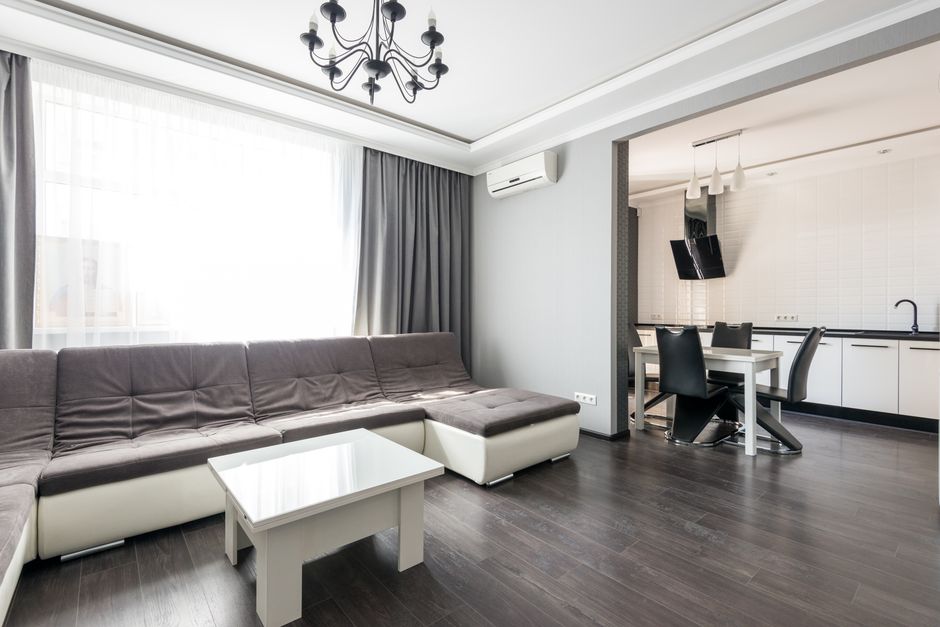
Can I fix the layout in 15 minutes?
Yes. Start by switching off the fan so you can judge the room without a moving breeze. Find the supply vent and return grille. Move the sofa, cabinet, or chair that sits closest to either one. Pull the coffee table forward only if it blocks the route between the seating area and doorway. Open the curtain on the shaded side and tie back any fabric covering a vent.
Turn the cooling system back on and wait 10 minutes. Stand near the doorway, beside the sofa, and in the far corner. You are looking for a more even feel, not a blast of cold air in one spot. If one corner remains stagnant, add a circulator low to the floor and aim it across the room.
What should the final layout look like?
The sofa should sit away from vents and returns. The main walking route should remain about 30 inches wide. Tall storage should stay out of the direct air path. The fan, if you use one, should push air toward the warm zone or across the room, not simply at the nearest person. Keep every cord out of the walking route.
That solves the original problem: the sofa no longer sits in a sealed pocket while the air conditioner cools an empty patch of wall. The room may not feel dramatically colder in the first minute, but the heat will spread more evenly and the far corner will stop feeling forgotten.
Final verdict: For a hot living room, open the supply-to-return route, leave 12 inches around vents, preserve a 30-inch walking path, and add one well-aimed circulator only after the furniture is right. That is the layout tweak that turns a stuffy sofa corner into a usable room.